June: Garden to do’s indoors
Ingrid Van Oostrom | JUN 2, 2023
June: Garden to do’s indoors
Ingrid Van Oostrom | JUN 2, 2023
June arrives and we can see the difference in nature. Plants go from ‘I am happy and I grow ladiela’ to ‘WHOOOOOHOOOOOOOO’. Are you ready for whoohoo?
It is starting to be consistently warm and sometimes hot outside and that means it is warm, hot, or scorching in glasshouses, conservatories, and polytunnels. Tasks are likely to decrease. By now most plant babies have been hardened off or are planted but that does not mean the intensity decreases. Of course it depends on the size of the garden and the indoor areas. Watering is a key word!
June has a similar list to May but there are slight differences. Let’s dive into the garden to do’s for June indoors.
1. Check monthly plan
The longest day is on the 20th or 21st of June. Do you celebrate midsummer or the summer solstice?
2. Check, take, and pot on cuttings
How are the pelargonium cuttings doing? In June I try to minimise what I can because watering will take up most of the time. I do take succulent cuttings at this time because they are such easy plants to root. We only need to make sure the growing media the cuttings are in stays dry or only has a tiny bit of water in it after a few weeks of taking cuttings. If we water the cuttings straight after taking them, they are likely to rot. When cutting succulents let the cut dry before potting them up. But if is only you or someone who knows what they are doing tending the cuttings, you can pot them up straight away as long as the compost is dry and stays dry for those first few weeks.
3. Water, damp down, vent
This is similar to May. Know the plants so we know how and what to feed them and when to water them. Check every day because plants will dry out very quickly from now until September. Every day will be like this: water, check water, water and at the end of the week I add feed to that routine. If we are growing vines, peaches, tomatoes, or peppers, all of those needs quite a lot of water and on top of that tomatoes are hungry plants so feed them a tomato feed rich in potassium to produce healthy flowers and fruits. I feed tomatoes twice a week, not just once. When watering or feeding is not done properly it can cause issues such as fruit split in fruits or blossom end rot on tomatoes. Water when it is needed and water properly. Do not just wet the surface and do not forget to drink water yourself!
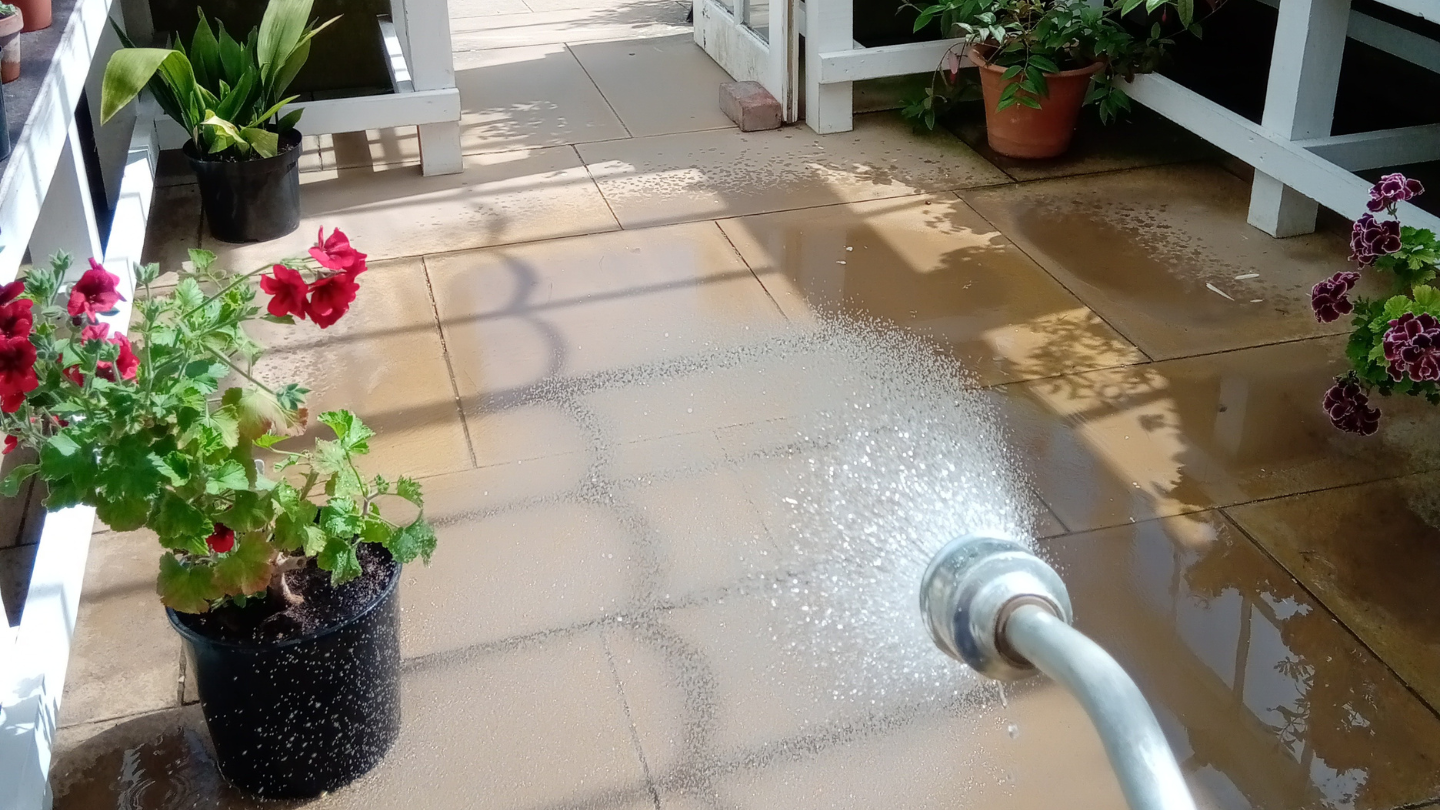
Damping down (wetting floors so water evaporates and humidity rises) will become important in the next few months if the plants like humidity or if we need to deter two spotted spider mites. Those beasties do not like humidity, they like the air to be dry, so damp down when they are taking up residence in the indoor space as long as the plants enjoy humidity too.
When temperatures are warm outside I damp down in the morning if I can feel the warmth already then I damp down before or after a morning break then before I have lunch and when I come back, and then before I leave it for the day.
At this time vents and often doors are open and we only close them if the temperatures drop considerably at night or when it is forecasted to be quite windy. Airflow is important not only to let cooler air into the indoors but also to help with pest and disease management.
4. Pest and disease management
Aphids, white fly, two spotted spider mite, mealy bug, scale insects, powdery mildew, downy mildew, and many more start to make an appearance if they have not already. Keep a close eye on the plants. Check also underneath the leaves and take action quickly when they are spotted.
5. Sow, plant, and harvest
Which plants are you looking at every day to see the progress in fruit? I am always on the lookout for flowers on tomato plants and on my favourite chilli called Padron. Have you seen chilli flowers? Those are beautiful. July will be tasty!
In June sow seeds of perennial or biennial plants that we like to flower next year or maybe we have seeds for plants that flower in winter. Have you created a list or have a box with seeds in it? Always check the sowing directions on the packet, it will tell you in which month(s) to sow the seeds.
What are you growing in the glasshouse, conservatory, or polytunnel? Lettuce, spinach, radishes, or herbs? I love fast growing crops, those can be harvested this month (hello cucamelons!) and we can start sowing Pak Choi now too which will be ready in a few weeks.
When chewing on tasty treats we can sow new seeds for fast growing crops if we have not done so already. Successional sowings are brilliant, depending on the crop sow seeds directly every two or three weeks to make sure to have a steady harvest throughout the growing season. Yum!
If you are lucky you might have some juice peaches to try at the end of June but often it will be July in Scotland.
6. Tidy displays
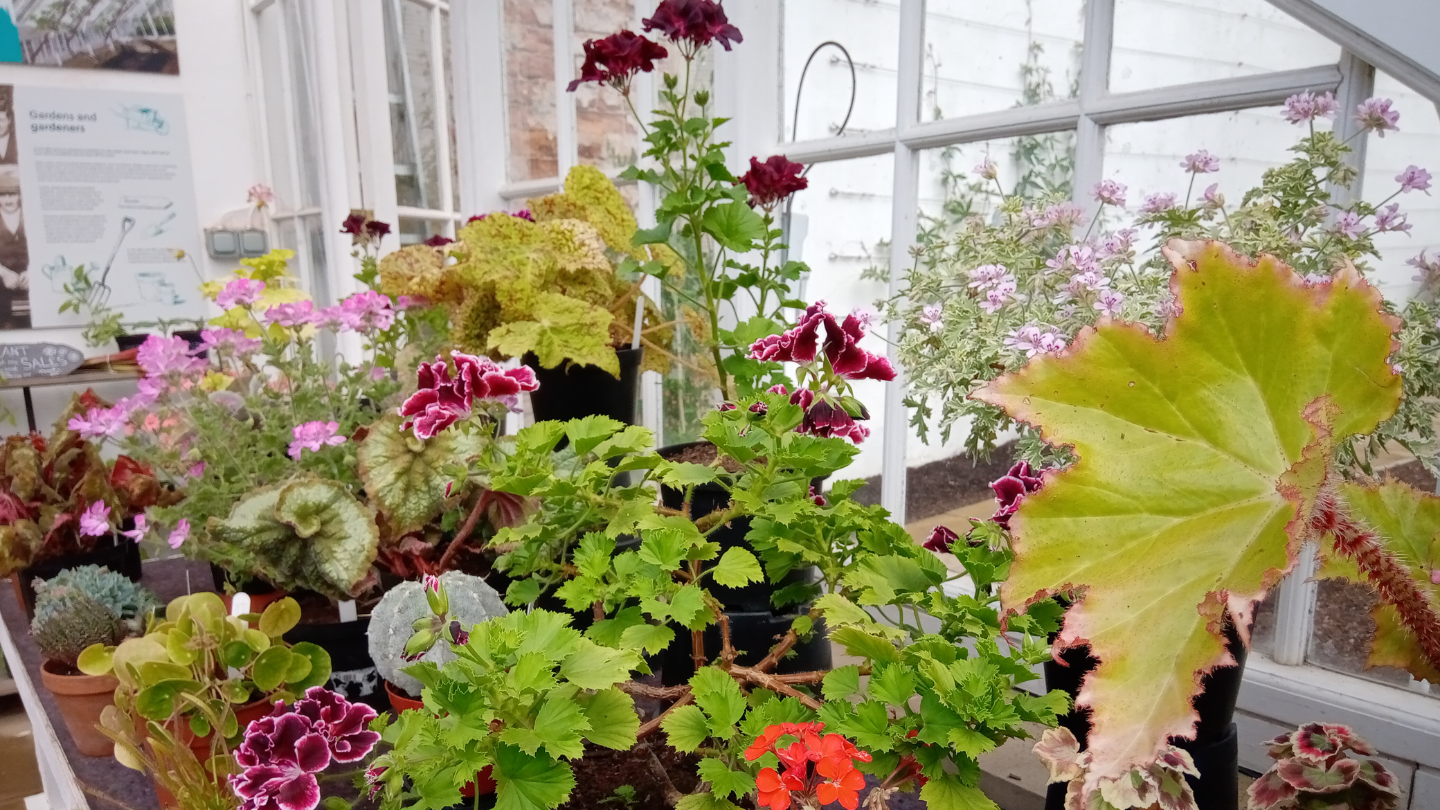
Remove any dead material, check for pests and diseases, and replace a non-flowering plant for a flowering one. Keep the area tidy otherwise it could become a pest party. That is a kind of whoohoo no one wants or needs!
7. Remove shoots, leaves, and tendrils from grapes and thin grapes
Another crossover with May. Read more about it in May’s article.
8. Pinch side shoots from cordon tomatoes, also known as vine or indeterminate
And another crossover. Keep removing those shoots and keep checking support for the tomatoes.
9. Breathe, appreciate your creations, and visit other gardens
What I enjoy in the garden is working split shifts when it is warm. Early in the morning until it starts to heat up, then a long break, and then again late afternoon or early evening. There is no point in watering between 12pm and 4pm, the water just evaporates. During my break I often sit somewhere in the shade or walk around the garden and look at the plants, trying to not go into work mode but just enjoy them.
Enjoy your creations. Look and appreciate at what you are creating with nature and have a look at other gardens. It is a great time to admire each other work. Magic!
Please note: This post is written in the south of Scotland - UK. Adjust the month to your hardiness zone. If you have specific gardening questions, please do not hesitate to reach out.
Ingrid Van Oostrom | JUN 2, 2023
Share this blog post

 OfferingTree