May: Garden to do's indoors
Ingrid Van Oostrom | APR 29, 2023
May: Garden to do's indoors
Ingrid Van Oostrom | APR 29, 2023
May is one of my favourite months. The weather usually warms up to lovely temperatures, many plants are showing off their flowers, plant displays look lush, people are generally in a happier mood now the winter really has disappeared, crops and ornamentals are being planted, wildlife is buzzing (literally), and I get to share cake and open a few gifts with great company because it is my birth month! What do you like about May?
Let's have a look at the gardening jobs indoors that we can do in the lovely month of May starting with the cross overs from April.
1. Check monthly plan
I know, I know...
2. Check, take, and pot on cuttings
Although most softwood cuttings (hello pelargoniums) are taken in early spring, it does not mean we cannot take cuttings in May (hello pelargoniums). I am a firm believer of never try never know. What we read in books is advice and there is not one right way to achieve results. I have had success with softwood cuttings for certain plants when books advice to take hardwood cuttings and vice versa and I have had success with semi-ripe cuttings when books advice to take semi-ripe cuttings. Listen to advice and experiment if you want. The practical world does not always allow to do certain jobs at the 'right' time or in the suggested way. One tip though, because temperatures are rising and it can rise quickly, make sure to stay on top of pests and diseases and watering.
3. Feed and water
Plants are growing rapidly which means they need sufficient nutrients and water to stay healthy. Check plants in the morning for watering and you might need to check them again late afternoon depending on how warm it gets. On warm days I tend to water again late afternoon so plants can absorb all they need during the latter hours of a day when it is slightly cooler. I only do that on days when it is warm or hot in glasshouses and for plants who need it. When watering later in the day when it is cooler, fungi are encouraged to grow on the growing media which is far from ideal. As I mentioned in April’s article there is no 'quick fix' or 'one rule fits all' when it comes to watering and feeding. Know… YOUR… plants!
4. Pest and diseases management
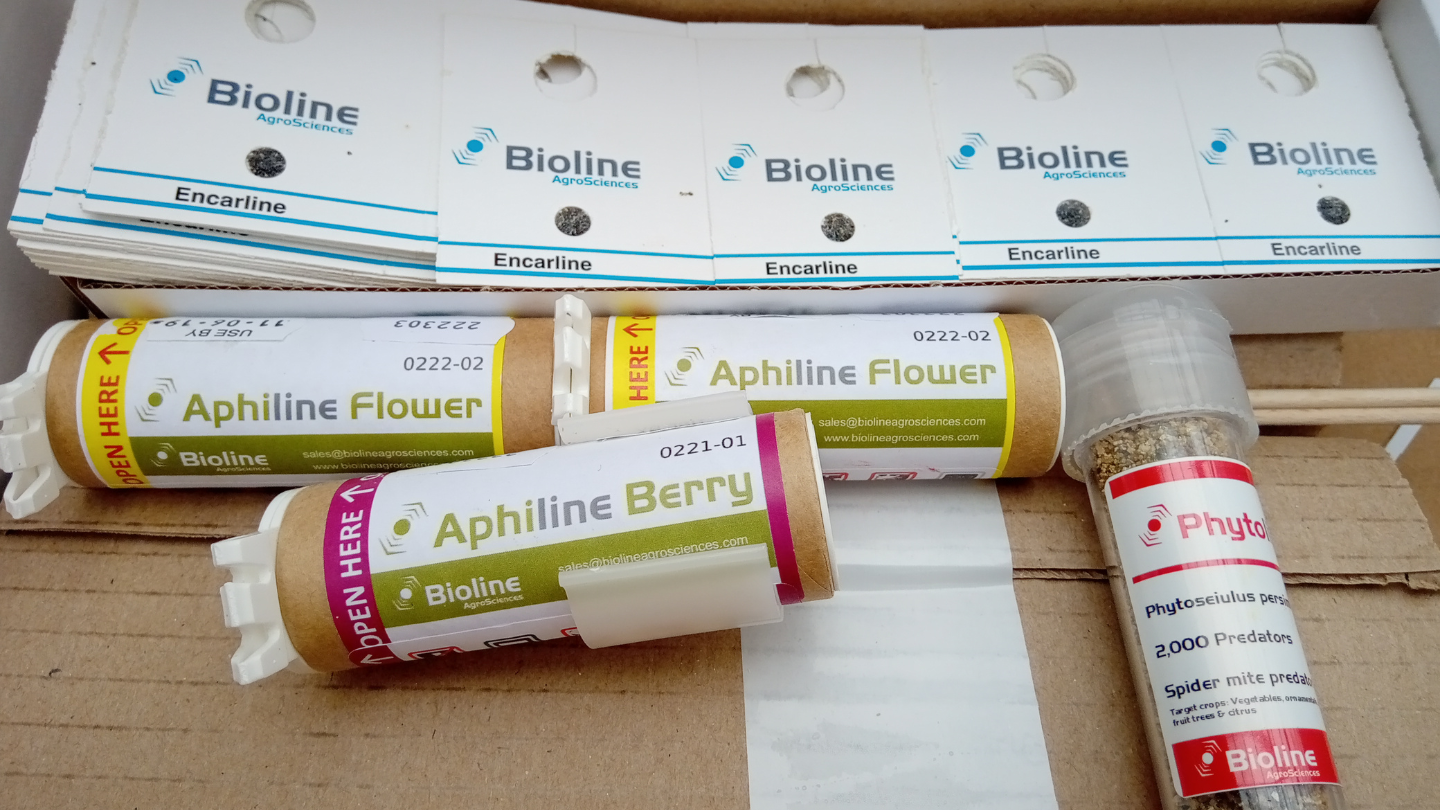
What insects are buzzing indoors? At this time introduce nematodes that prey on vine weevil larvae. Especially succulents are attractive to this pest. In the large glasshouses I introduce biocontrol every two weeks or so to control aphids, whitefly, and spider mites. Biocontrol depend on temperatures, keep an eye on that and research. For example, biocontrol for spider mite will only have an effect if temperatures reach 21 degrees Celsius or above. Of course there are sprays we can use and some pests are easy to remove ourselves as long as we monitor plants. If plants start to look a bit 'under the weather' and watering is kept to a good level, check under the leaves, and check growing media. Maybe some larvae are gnawing at the roots or scale is sucking sap on the underside of the leaves.
Some people love companion planting. Plants are planted with other plants that deter certain pests. Two years ago I planted calendulas with tomatoes because I love the idea of companions and WOW! The aphids were having the best time of their lives. There were aphid parties everywhere, but I was not joining in with their celebrations. I was wondering if it might have been the poor ventilation. Vents that work are awesome, ones that do not work not so much. My colleagues never seen infestations that bad either so the next year I decided to grow tomatoes without any companion plants and I hard hardly any issues with any pests. This is not to say there are no other companions out there who might do wonders, especially outdoors, I am only saying this is an example where advice did not ring true after the experience and I decided on other gardening practises of managing pests. I might try other companions at some point but for indoor gardening I enjoyed the result of no infestations of aphids with no companion plants.
Remember that weeds can carry diseases or attract pests so get rid of them when you spot them or have a weeding session at least once a week.
5. Sow, plant, and harvest
In May I am planting tomatoes, peppers, cucumbers, aubergines, cucamelons, chillies, and we can plant melon, squashes, and gourds or sow them direct. At this time they are a good size to plant out. I prefer to wait with planting when the roots are getting close to being pot-bound. The beds have been prepared with a feed, fresh compost has been added and I tend to add more fresh compost when I plant them. Add support where needed to give plants the best growing conditions. Give them a good soak after planting the precious crops. These are thirsty and hungry plants so water regularly and feed them appropriately. As always.... research and know the plants #brokenrecord.
Successional sowings of lettuce and radishes are great and we can start sowing corn (Zea mais), flowers, and herbs like basil, sage, thyme, Consolida ajacis (larkspur), Dianthus sp., Echium sp. and Digitalis sp. (foxgloves). Dianthus, and echiums. Foxgloves sown now will be ready for next year because they are biennials. This means they need one growing season to grow vegetative parts and in the second growing season they will put their energy into producing flowers. Can you understand why I always put checking lists every month at the top?
Strawberries, lettuce, radishes, herbs, and whatever else is planned to be harvested in May. What is your favourite fruit or veg to eat this month that is grown indoors?
6. Refresh displays
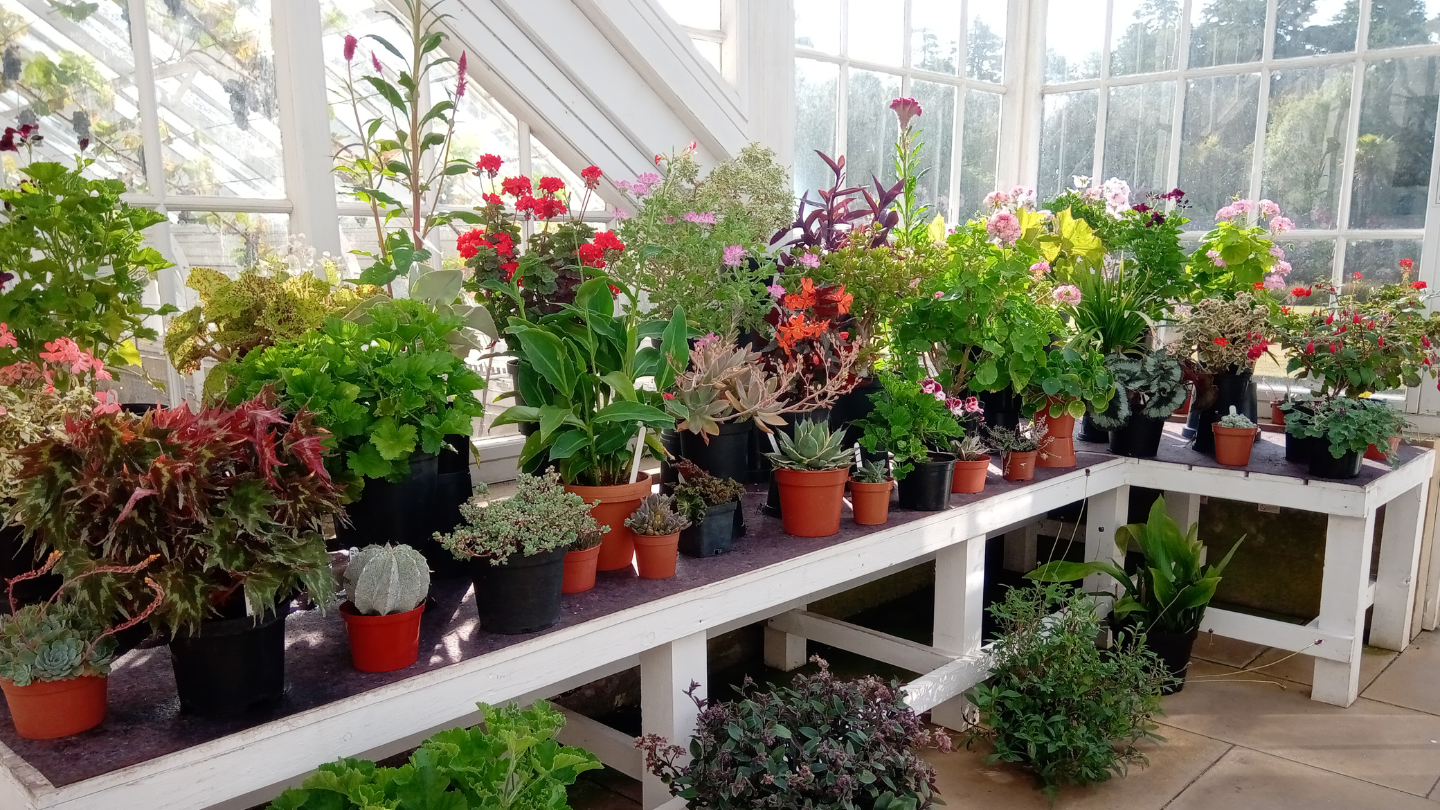
Oh the lushness! I absolutely LOVE refreshing displays. Once a week I tend to give the display a good look over and tidy anything that needs tidying. Keep the area fresh and clean, deadhead when needed, remove any leaves that are finished or show signs of diseases like powdery mildew or grey mould, and swop plants that are done flowering with plants that are showing off.
7. Apply shade paint (or netting), ventilate, and damp down
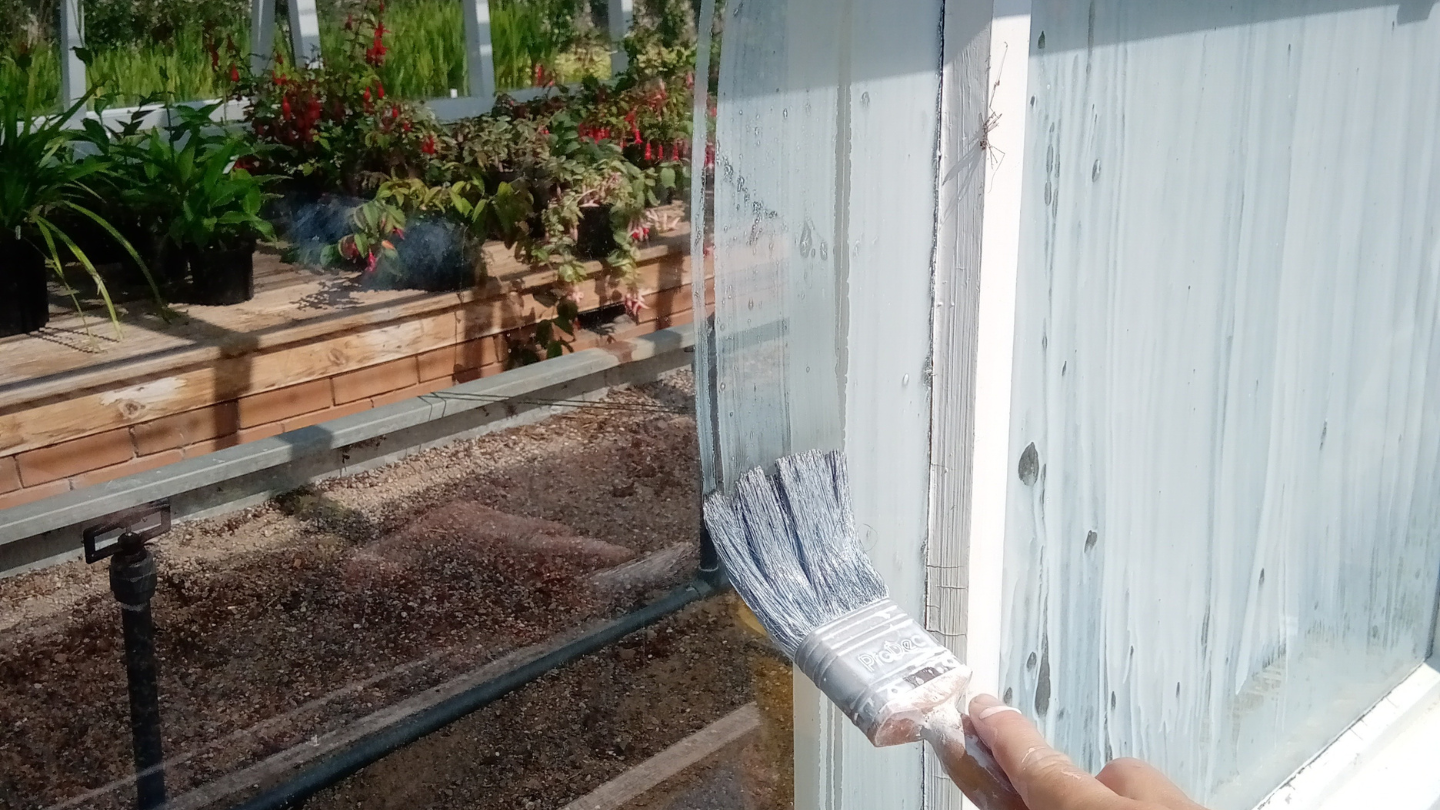
Heat intensifies when rays enter through glass which means plants could suffer from scorch if not careful, especially the ones placed close to the glass. There are shade paints which are applied on the outside of the glasshouse. They could be applied on the inside but cleaning from the outside is easier. These paints are weatherproof and come in different shades and colours. By painting them on the glass, light still comes in so plants receive enough to continue with photosynthesis but the heat that comes in is less. Happy days! Another option is to use shade netting.
Oh the joy of good airflow! Use those vents and doors and keep an eye on temperatures. They can still drop quickly in the evening and night especially at the beginning of May. Ensure to close vents and doors or leave them open when it is warm enough during the night depending on the tenderness of the plants.
Damping down starts to get more and more important. From mid-May I start to damp down maybe twice a day and if the weather decides to introduce summer temperatures it might even be three times a day in the morning, early afternoon, and late afternoon. It all depends on temperatures! Find the details of damping down in April’s indoor article.
8. Pinch side shoots from cordon tomatoes, also known as vine or indeterminate
For tomatoes that grow as cordons, remove the side shoots (sometimes called laterals). We want the energy to go into the fruits. Soft and thin side shoots are easy to pinch out but it is better to cut the thicker shoots because those tend to not snap off cleanly. Be careful though, know how the selected variety grows. Some varieties grow as bush tomatoes, also known as determinate, which means pinching out side shoots is not a good idea because fruits grow on those shoots.
9. Remove shoots, leaves, and tendrils from grapes and thin grapes
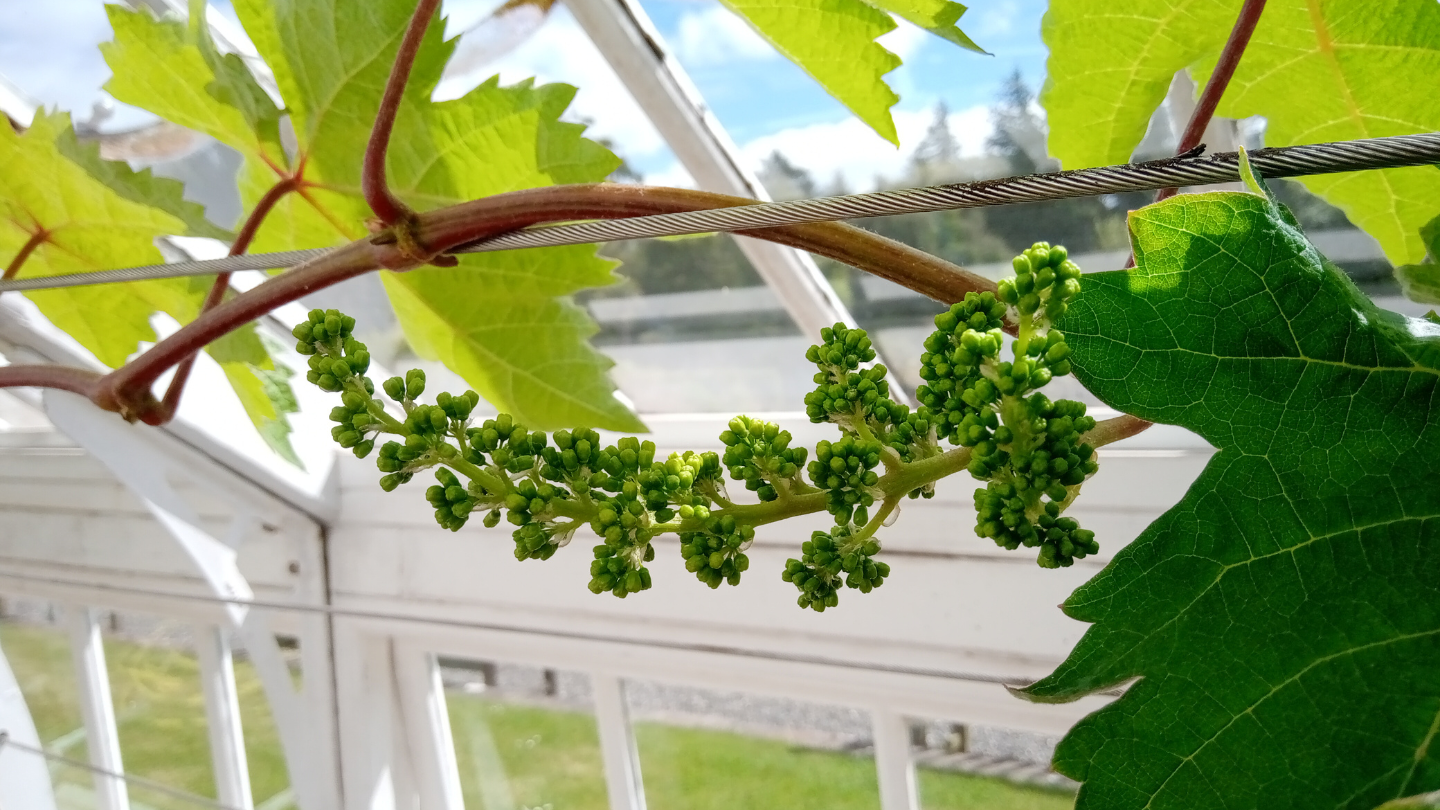
Like most plants, grape vines need good airflow and light for healthy growth and a good crop. When we grow cordons indoors keep removing shoots when we have selected strong ones to keep. Stop the shoot after the second bunch of grapes if there is space. I tend to stop them after one bunch. Remove the tendrils because they tend to tangle up in the bunches. Thin the grapes when the small fruits start to form so each grape has space to grow into and it also reduces the chance of fungal diseases. It is a fiddly job and takes quite some time but it is worth it. There are special tools for this task. Keep an eye on the leaves too. When they start showing signs of powdery mildew or downy mildew remove them if possible. Many leaves can reduce light and airflow quite significantly so select leaves to keep and to remove. We want the plant to have enough leaves to stay healthy.
10. Enjoy the garden and make strawberry jam
Grab a drink and go for a walk in the garden enjoying flowers, wildlife, and harvest strawberries for jam. If you are like me strawberries do not have a chance, I tend to eat them straight away although I am intrigued by strawberry and basil jam...
There you go, a list of May gardening jobs indoors.
Happy gardening!
Please note: This post is written in the south of Scotland - UK. Adjust the month to your hardiness zone. If you have specific gardening questions, please do not hesitate to reach out.
Ingrid Van Oostrom | APR 29, 2023
Share this blog post

 OfferingTree